
Do’s and Don’ts Security
PLEASE BE INFORMED BEFORE YOU START TO USE THE FLAM’OR WAX COLLECTION
Before burning: Place the candle away from drafts. Cut the wicks regularly. These should not be longer than 0.6 cm to avoid black smoke and soot deposits on the edges of the container. Do not leave pieces of wick or match in the wax. The leftovers can catch fire and make the wax blacker.
During burning: Wait until the entire surface is liquid before extinguishing the candle to avoid craters. The first time will take longer than the next. NEVER leave the last centimetre of wax burning so that the flames do not come into contact with the glass and thus prevent the pot from overheating. A candle that overheats can catch fire! NEVER leave the candle burning for more than an hour once the surface of the wax is completely liquid. A flame that comes into contact with glass can cause the glass to crack !
After burning: rearrange the wicks in their original place before the wax hardens again. This is to prevent the flames from touching the glass container during the burning process. Clean the inside of the candle regularly with a non-alcoholic product to prevent soot build-up. A deposit of soot on the edge of the candle can be the cause of black smoke. Store the candle in a dry place and at room temperature.
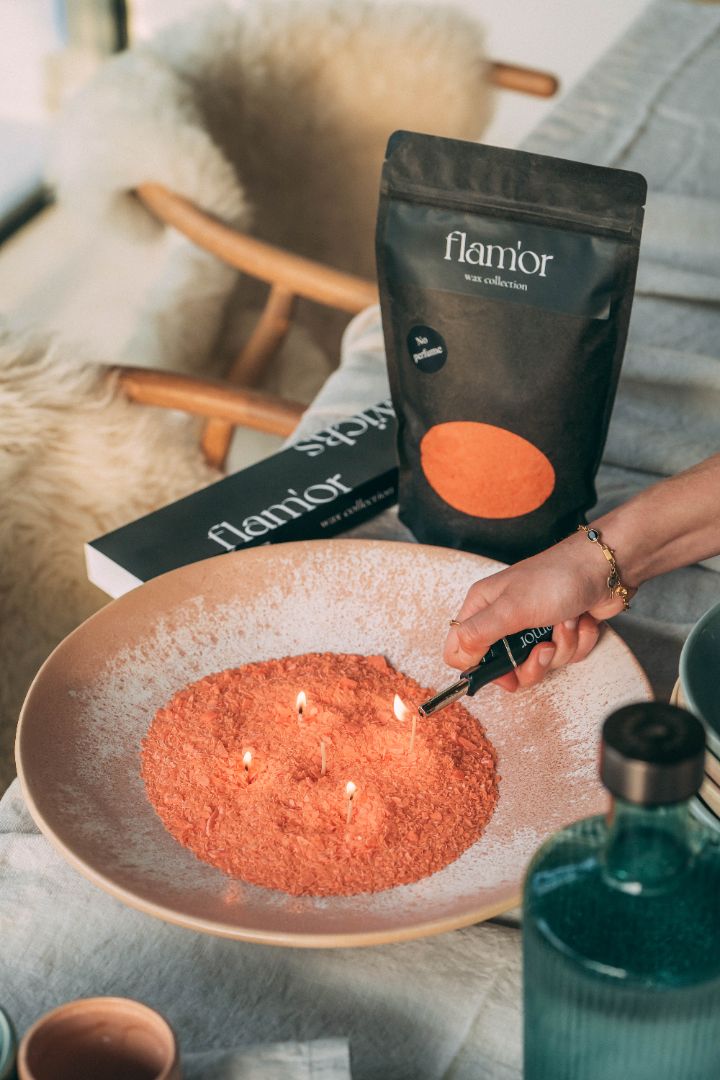
Burning your candles safely!
Burn within sight. Keep away from things that catch fire. Keep away from children and pets. Always leave at least 20cm (8 inches) between burning candles. Do not place candles near a source of heat. Put candles on a heat resistant surface. To reduce soothing, you must trim the wick to 0.6 cm (¼ inch) each time the candle is to be relit. Avoid using in draftee areas. Keep the wax pool free of wick trimmings, matches and debris at all times. Extinguish the candle if it smokes, flickers repeatedly, if the flame becomes too high or when there is only 1cm wax left. Very important: STABILISE YOUR WICK(s). Use Wicks Wax (= removable adhesive) if you are not sure. If you refill a candle or a T-light, remove the previous wick(s) to avoid that flames of new wick(s) touches the glass and overheats the glass. The glass can burst and cause fire.